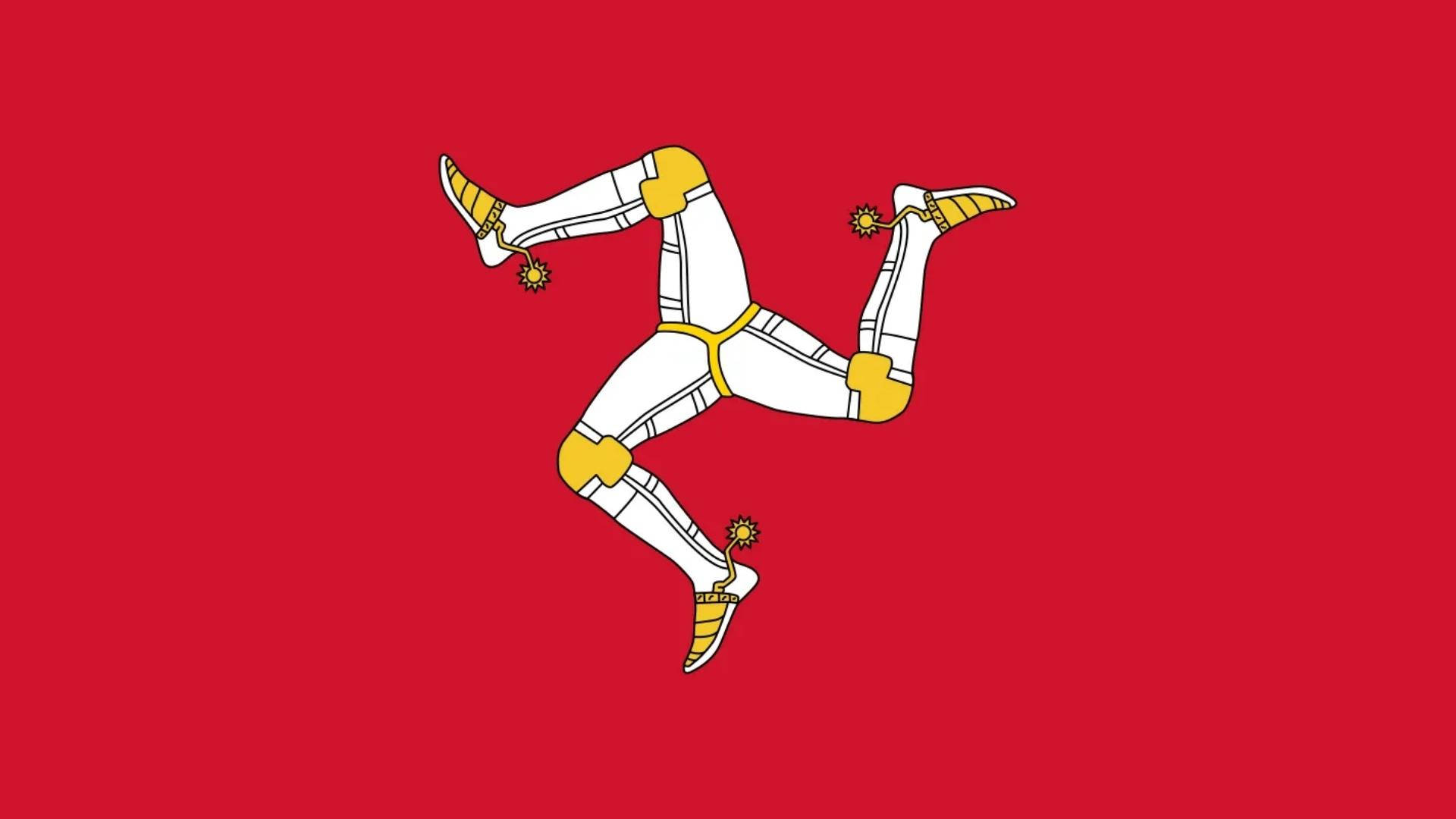
The Isle of Man flag is a red banner bearing a triskelion of three armoured legs, joined at the thigh and finished with golden spurs.
Known in Manx as ny tree cassyn (the Three Legs), this emblem has represented the island for centuries. But why three legs, what do they mean, and where can you spot them during a visit?
What is the Isle of Man flag?
The flag features three bent legs arranged in a circle on a red background. The symbol is a type of triskelion, a pattern made up of three lines, branches or limbs, interconnected at their centre. The Isle of Man's armoured version is distinctive and instantly recognisable to visitors.
What does the Isle of Man flag mean?
The Three Legs of Man (ny tree cassyn)
The Three Legs are associated with strength, independence and resilience; their circular arrangement suggests a constant movement, like the legs are running forwards. The original meaning isn't known for certain, but the emblem has become a powerful expression of Manx identity, and you'll see it across the island.
The golden spurs add to the sense of energy and determination, and the red background is used to symbolise courage and vitality.
The motto: Quocunque Jeceris Stabit
The Manx motto, Quocunque Jeceris Stabit, translates as “Whithersoever you throw it, it will stand”. It suggests that whatever happens, and whichever way the island is turned, it will remain standing – a fitting message for a place with a strong independent spirit.
The history of the Manx flag
Where did the three legs come from?
The symbol's precise origins aren’t entirely clear, and there are a few competing theories.
One suggests a connection with Sicily, whose ancient emblem, the Trinacria, also features three bent legs arranged around a central point – but a direct link hasn't been proved.
Another theory looks to Celtic or Norse traditions, where three-part symbols could represent the sun, movement or the cycles of life. Related designs appeared on coins associated with Norse rulers, including Anlaf Cuaran, whose territory included the Isle of Man.
Manx folklore offers a local explanation – the sea god Manannan Mac-y-Leirr is traditionally said to have protected the island with magical powers and mist, and some stories connect him with the three-legged emblem.
What is known is that the Three Legs were used as a royal emblem by the Kings of Mann in the 13th century, with one early surviving example being the Manx Sword of State, believed to date from around 1300.
When did it become the official flag?
The emblem is medieval, but the familiar red flag came much later, becoming the Isle of Man's official flag in 1932
Other Manx flags you might see
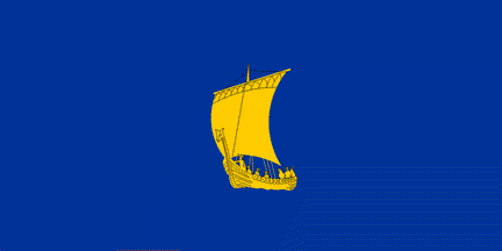
The red flag isn’t the only design associated with the island. Tynwald, the Manx parliament, has its own flag: a blue banner featuring a sailing ship, based on the historic vessel emblem associated with the Kings of Mann. Known as the MacDonald Flag, it is flown on important parliamentary occasions.
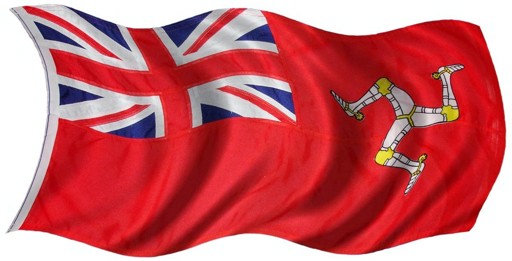
You may also see a Manx version of the British Red Ensign around harbours and on vessels. It combines the maritime flag with the Three Legs, a reminder of Manx identity.
Where to spot the three legs on your visit
Once you recognise the emblem, you'll start seeing it all over the Isle of Man. Look out for it on Manx coins, where the Three Legs have featured for centuries, and on commemorative postage stamps celebrating the island's heritage.
Motorsport fans will recognise it in TT branding and displays around the Mountain Course, the 37.73-mile route that carries the world-famous races through towns, villages and open countryside.
For a memorable cultural experience, visit on or around Tynwald Day, held on July 5th or the following Monday. This national day includes an outdoor sitting of parliament at Tynwald Hill in St John's, and visitors can see the historic Sword of State, which bears an early depiction of the emblem.
You'll also find the symbol on public buildings, signs and souvenirs, which can be a fun game to keep children occupied.
Visit the Isle of Man with Steam Packet
The Three Legs are more than an unusual flag design. They're a symbol of the Isle of Man's history, culture and independent spirit. From coastal scenery and historic sites to the excitement of the TT and the traditions of Tynwald Day, there's plenty to discover.
Book your crossing with Steam Packet and explore the island for yourself.