Passengers travelling via Liverpool: Roadworks warning
Please allow additional time for arriving and departing from Liverpool Terminal for the duration of emergency works on Great Howard Street - see Mersey Travel Website for further details (external link opens in new tab)
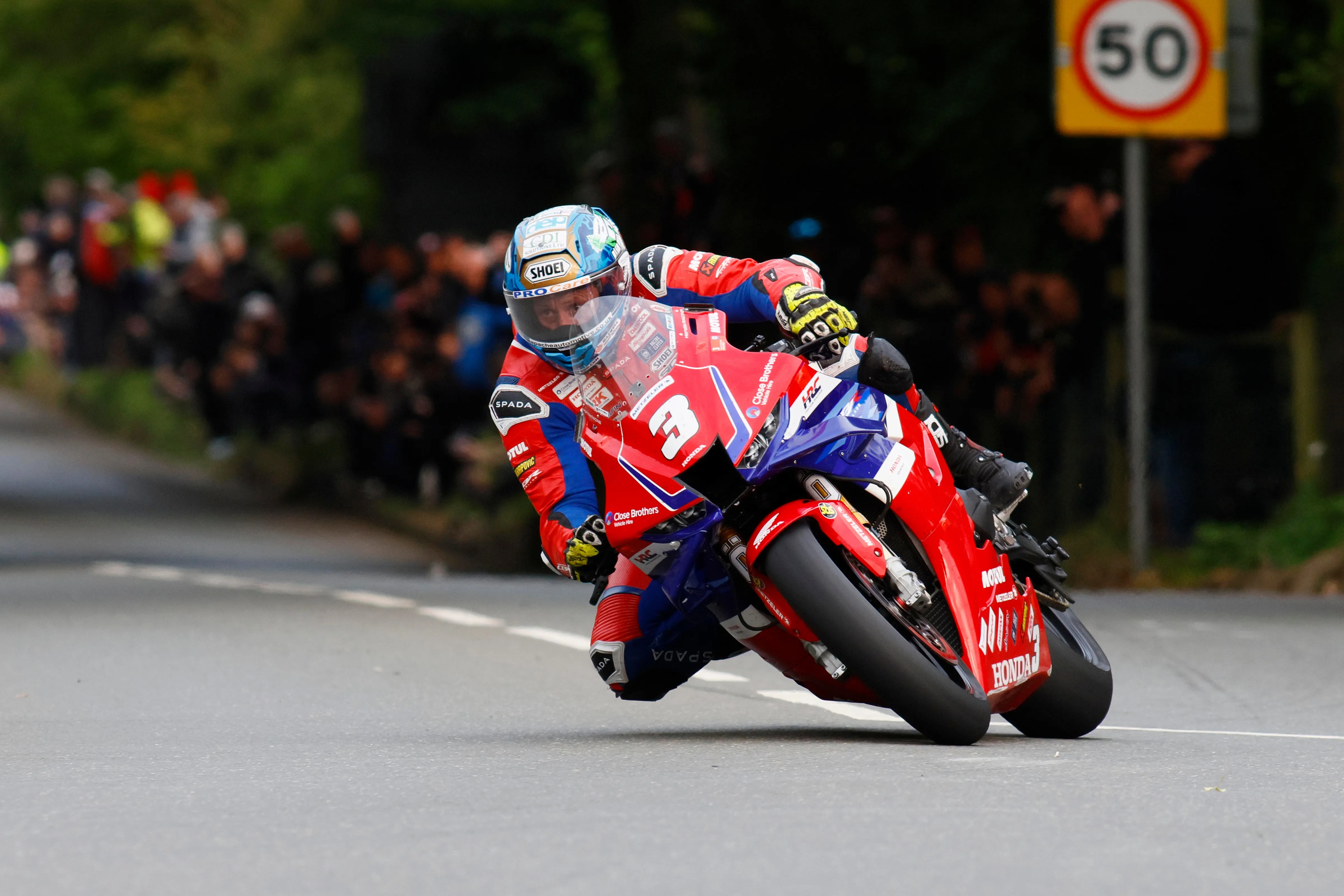
Every May and June, the Isle of Man becomes the centre of the road racing world. The reason is simple: there is nothing like the TT. It isn’t held on a purpose-built circuit or behind grandstands and barriers – no, the Isle of Man TT is raced on real roads that wind through towns, villages, farmland and open mountainside.
For many first-time visitors, the scale of the course can be hard to picture until you’re standing beside it. The Snaefell Mountain Course is 37.73 miles long, made up of more than 200 corners, and packed with legendary sections that have tested the world’s best riders for over a century.
This guide breaks down the course section by section, so whether you’re planning where to watch, deciding where to stay, or simply want to understand what makes the TT so special, you’ll arrive on the island already knowing the roads that define race week.
What is the Isle of Man TT course?
The TT Course is the setting for the Isle of Man TT Races, where the world’s fastest road racers tackle a public-road circuit unlike anything else in motorsport. This race is known worldwide as the ultimate test of rider skill, speed and bravery, with speeds approaching 200mph.
The race is built around the Snaefell Mountain Course: it’s 37.73 miles long, uses closed public roads, and strings together more than 200 corners through the capital city, Douglas, the countryside, and the island’s mountains.
For first-time visitors, the best way to understand the TT is to picture it as a loop with a very clear rhythm. It starts in the capital, races through the built-up opening miles, settles into the island’s western lanes, climbs onto an exposed mountain road, then plunges back down toward Ramsey and Douglas.
When you understand where the lap turns, climbs, and drops, you understand where the best viewing spots are, how the island opens up during race week, and why so many visitors return year after year.
The course has been part of TT racing since the earliest events, and the route’s famous landmarks are as much part of the experience as the racing itself.
Course layout
The TT Grandstand at Noble’s Park, Douglas
This is where the lap begins and ends, and where the whole spectacle feels most intense. The start area in Douglas is all about acceleration, crowd noise and the first surge of nerves as riders launch into the opening miles.
It’s not a gentle rollout; the course drops away quickly, and the bikes are straight into the rhythm of the TT. For spectators, it is the best place to feel the build-up and the release of race day in one spot.
Bray Hill
Bray Hill is one of the most famous pieces of road in road racing for a reason. The descent is steep, fast and unforgiving, so the bikes look almost unreal as they disappear downhill at full speed. What makes it thrilling is the sheer commitment required so early in the lap: riders are immediately thrown into a section where confidence, balance and bravery all matter.
Quarter Bridge to Ballacraine
This stretch shows the TT’s variety in a single run. Quarter Bridge marks the start of the move away from Douglas, and from there the road opens into a faster, more flowing section with a mix of bends, rises, and changes in rhythm. It is less about one dramatic corner and more about the constant transition from urban edges to open countryside.
For riders, that means building speed while staying precise. For spectators, it’s a good reminder that the TT course rewards both power and patience.
Ballaugh Bridge
Ballaugh Bridge is one of the course’s most recognisable moments because it combines speed with a very visible piece of elevation. The road rises over the bridge, and the bikes can appear to float over it before landing back into the next section.
That makes it exciting for the crowd and tricky for the riders, who have to stay fully committed while the surface changes under them. It’s not the sharpest corner on the course, but it is one of the most iconic because the bridge itself becomes part of the drama.
Sulby Straight
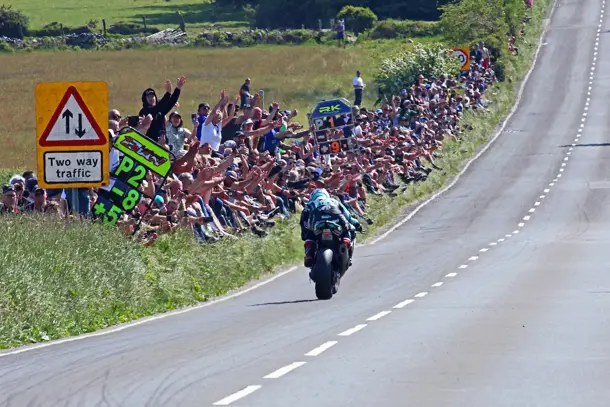
Sulby Straight is where the TT shows its raw pace. This is one of the fastest stretches of the course, and it gives riders the chance to really stretch the bikes out and raise their average speed. The excitement here comes from contrast: after the technical corners and uneven road sections elsewhere, this is a long, open blast that looks almost calm until you realise how fast the machines are travelling.
Ramsey: Parliament Square and The Hairpin
Ramsey marks a major change in the character of the course. Parliament Square brings the riders into a built-up setting again, but there’s no pause in intensity; the course remains narrow, technical and unforgiving.
Then comes The Hairpin, one of the most demanding corners on the lap, where speed has to be scrubbed off hard before the bike is fired back out again. The thrill here is all about contrast – from fast approach to tight turn, from momentum to precision, from confidence to control.
Gooseneck
Gooseneck is a corner that asks for balance and nerve rather than brute speed. It sits in the mountain section and has a distinctive shape that demands a smooth, controlled approach.
What makes it interesting is the way it breaks up the quicker flowing parts of the course: riders come in carrying speed, but they can’t just attack it flat out. They need the right line, the right entry and the right exit to keep the lap moving. This corner looks deceptively simple from the roadside but feels anything but simple in the saddle.
Bungalow
The Bungalow is one of the most atmospheric points on the course. Sitting high on the mountain, it’s exposed to the weather and offers a sense of scale that few other parts of the lap can match.
From a racing point of view, the challenge is less about a single corner and more about maintaining speed and concentration in an environment that can change quickly. Wind, mist and visibility all matter here. That’s part of the appeal: the Bungalow reminds riders that the TT isn’t just happening on a road, but across a living landscape.
Creg-ny-Baa
Creg-ny-Baa is one of the great spectator spots because it combines history, setting and speed. The road here is fast and flowing, but it also asks riders to be accurate as they come down from the mountain and back toward Douglas. The excitement comes from the downhill momentum and the way the bikes attack the section with real commitment after the exposed upper part of the circuit. It’s a place where the race feels like it is gathering itself for the final run home, and that gives it a special energy.
Plan your TT week with Steam Packet
The best way to experience the Isle of Man TT is to arrive ready to explore. Travelling by ferry with Isle of Man Steam Packet means you can bring everything you need for race week, whether that’s your bike, your car, camping kit or just your sense of adventure, and step straight into the atmosphere as soon as you reach Douglas.
It’s also the most fitting way to begin a TT trip – the island’s racing heritage is built on real roads, real journeys and real landscapes, and arriving by sea feels like part of the tradition. Once you’re here, you can move around the course at your own pace, pick your favourite viewing spots, and discover the towns and villages that make the TT far more than a race.