We understand that the extension of Manxman's dry dock programme may affect customers' travel plans. To help keep everyone informed, this page below provides the latest updates in one place.
The Isle of Man is one of the best places in the British Isles to spot whales, dolphins and porpoises in the wild. Surrounded by rich Irish Sea waters and home to dramatic coastal viewpoints, the island offers visitors the chance to see incredible marine life both from land and at sea.
Whether you’re scanning the horizon from The Sound, exploring the west coast at Niarbyl, or joining a wildlife boat trip around the Calf of Man, unforgettable encounters are waiting throughout the year.
Here’s where to go, what species you could see, and when to plan your visit for the best chance of spotting them.
Why is the Isle of Man a hotspot for spotting whales and dolphins?
The island’s appeal lies in the shape of its coastline and the way the tides move around it. Strong tidal currents at the Sound create highly productive water, which draws in fish and the marine mammals that feed on them, while the west and south-west coasts regularly deliver close views from land.
The Isle of Man is a fantastic place to observe whales, dolphins, porpoises, and even basking sharks from the coastline, with many of the best locations set up for natural, uninterrupted watching.
The efforts made by Manx Whale and Dolphin Watch to safeguard cetaceans (toothed marine mammals, including all whales, dolphins and porpoises) through non-invasive research and public engagement have helped many locals and visitors alike enjoy the wildlife of the Manx waters safely.
Species you could see
Minke whale
Minke whales are inquisitive, non-aggressive and typically grow to around 7-9 metres long, weighing around 5,600kg. They are less social than other whales, often travelling alone or with a small pod of 2-3, but they can gather by the dozen when food is in rich supply.
Around the Isle of Man, they’re typically seen off the south and west coasts between May and August, then move to the east of the island between September and November as they follow herring to spawning grounds.
In autumn, they can come within 200 metres of the coast, which makes visiting places such as Marine Drive especially worthwhile.
Common dolphin
The common dolphin is the most abundant cetacean on the planet, with around 6 million of them all around the world. They are highly sociable and playful, often leaping from the water as they travel, with top speeds of around 30mph. Their lively nature makes watching them particularly joyful.
You’re most likely to see common dolphins around the Isle of Man from June to September, especially on the west and south-west of the island. Their seasonality has increased in recent years, so summer visitors now have a better chance of seeing them than in the past.
Bottlenose dolphin
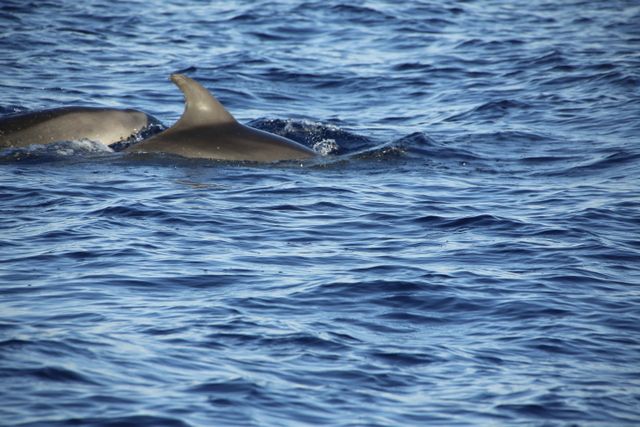
Bottlenose dolphins are larger than their common cousins, coming in around 2.5-3.5 metres long, and are solid grey in colour.
These dolphins have a different migratory calendar to the common dolphins, so they are usually seen around the Isle of Man from October to March, although you may see occasional small pods of bottlenose dolphins in Manx waters in summertime.
A general rule of thumb is that a dolphin in the winter is a bottlenose, but one in the summer is a common or a Risso’s.
Risso’s dolphin
Risso’s dolphins are fairly easy to distinguish thanks to their lack of a snout; instead they have a blunter, rounded head. They are light grey in colour and are often covered in scars and scratches from fighting and catching prey. Risso’s dolphins generally enjoy deep offshore waters, but they also like to breach clear of the water and slap the surface with their tails.
The Isle of Man is one of the few places in the UK where you can see Risso’s dolphins, alongside the Outer Hebrides and some other parts of Scotland. They return to Manx waters every March or April and usually stay until September, with strong viewing opportunities at Port St Mary, Marine Drive and Langness, as well as on the west coast at Niarbyl. They are also often seen around the Calf of Man in summer, either passing through the Sound or between the Calf and Chicken Rock.
Harbour porpoise
Porpoises are different to dolphins in many ways (smaller, chubbier, shy and don’t have beaks) but they are both cetaceans, and the harbour porpoise is the most common cetacean in Manx waters. They are so prevalent here that you can see them year-round and from pretty much any part of the island’s coastline. Estimates suggest there are around 1,000 porpoises around the Isle of Man at any one time.
Where can you see marine life from land in the Isle of Man?
The Sound
The Sound is one of the best places on the island for a first wildlife outing. It sits at the southern tip of the Isle of Man and is one of the best places to see all five species of local cetacean, plus basking sharks, because of the rich water created by the tidal flow. It’s especially good in summer for Risso’s dolphins, harbour porpoise and minke whales, while bottlenose dolphins are more often seen in winter.
The paved car park and café make it a straightforward stop for families, older visitors and anyone who wants easy access to a top wildlife viewpoint.
Niarbyl
Niarbyl Bay is another standout west-coast location. This secluded beauty spot just south of Dalby is a brilliant spot for all cetacean species and basking sharks. In summer, Risso’s dolphins, minke whales and harbour porpoises are frequently seen there, and common dolphins occasionally come close enough to be watched from land.
Marine Drive
Marine Drive, south of Isle of Man’s capital, Douglas, is a classic land-based watching point for cetaceans. It’s a scenic road on Douglas Head with wide views over the bay, and it’s a well-known area for whale watching, with sightings possible all year round.
Its prominence on the east coast makes it particularly useful for Risso’s dolphins, bottlenose dolphins, harbour porpoise and minke whales.
Peel
Peel completes the picture from the west side of the island, and it’s also home to the Manx Whale and Dolphin Watch Info Centre, which is a useful first stop for information about the different marine mammals.
The coastal footpath behind Peel Castle offers panoramic views out to sea and is open all year round, with cetacean sightings having been recorded off Peel breakwater and behind Peel Castle. For anyone based in the west, it’s an easy place to combine a seafront walk with a good chance of seeing wildlife offshore.
Whale and dolphin watching from the water around the Isle of Man
Organised boat trips are a wonderful way to see the coastline and marine life from on board a vessel, getting you closer to the wildlife and giving you a different perspective on the island at the same time. Also, the Calf of Man, a great lookout for whales, dolphins and porpoises, can be reached by boat in the summer months from Port Erin and Port St Mary.
What is the best time of year to spot whales and dolphins around the Isle of Man?
Late spring throughout summer and into early autumn is the strongest season for many of the island’s headline species. Minke whales are most often seen off the south and west from May to August, common dolphins usually appear from June to September, and Risso’s dolphins are present from March or April through to September. Winter is the best time for bottlenose dolphins, which are mainly seen from October to March.
Harbour porpoises are the exception, because they can be seen in any season.
In practice, that means there’s always something to look for on the Isle of Man, but the west and south coasts are at their liveliest from late spring into early autumn.
The Isle of Man offers something rare: a compact island where you can arrive by ferry, stand on an accessible headland, and watch whales or dolphins pass close enough to feel part of the landscape rather than hidden beyond it. You can even bring your car with you when you travel by ferry, helping you get around the island to the best viewing spots.